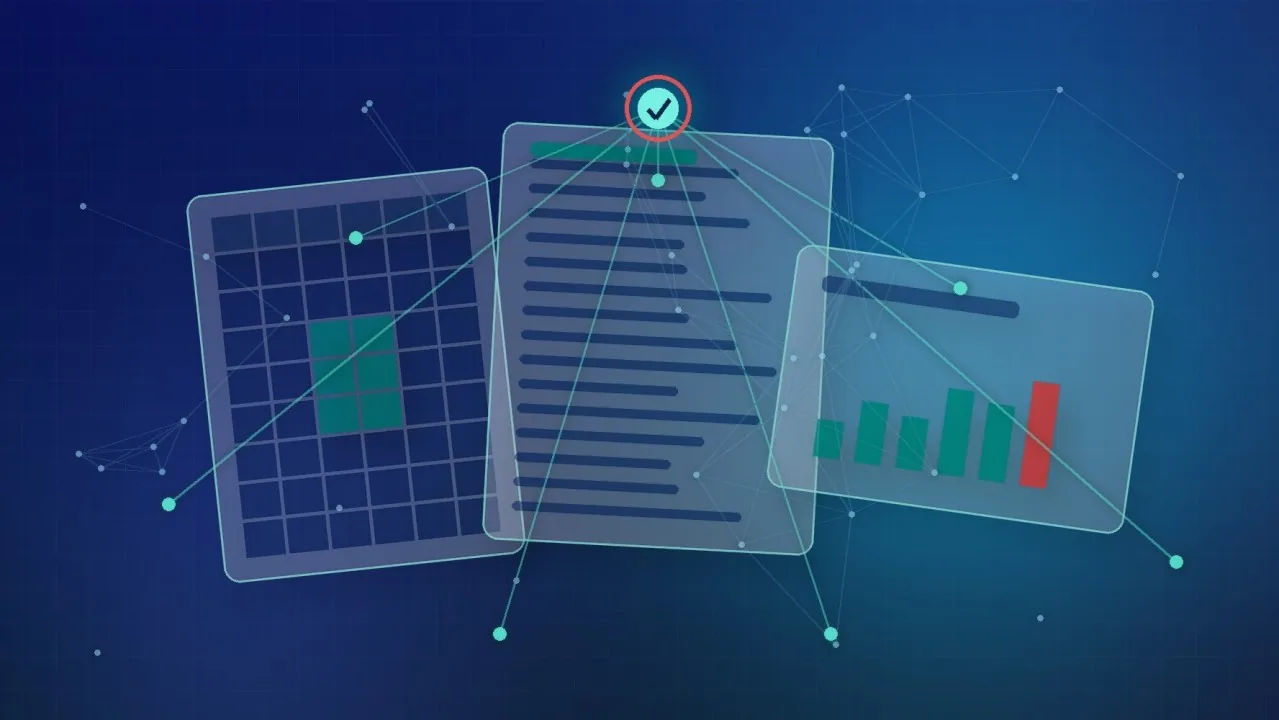
Since 6 October 2026, Anthropic’s Claude can sit inside Google Docs, Sheets and Slides and change the file directly, not just suggest text. Google records every one of those edits under the employee’s own name, which turns the setup screen into a leadership decision, not an IT detail.
At AG Tech Consulting, our advice to clients is to decide who gets the add-on, which files are off-limits and which approval mode is the default before anyone clicks Install.
What Anthropic launched
Claude for Google Workspace is now in public beta on all paid Claude plans. One install from the Google Workspace Marketplace adds a Claude sidebar to Docs, Sheets and Slides.
Anthropic also released beta connectors for Docs, Sheets and Slides. These let Claude create and edit Google files from the Claude app itself, when you paste a file link or ask for a new file.
The work goes beyond chat. In Sheets, Claude can write formulas, build pivot tables and charts, and pull a range into Python to clean or join data before writing it back. In Slides, it builds new slides from the deck’s own layouts and themes.
Anthropic already offers Claude inside Word, Excel and PowerPoint. VentureBeat notes the contest has moved to where staff actually work: their documents, spreadsheets and decks.
How it reaches your files
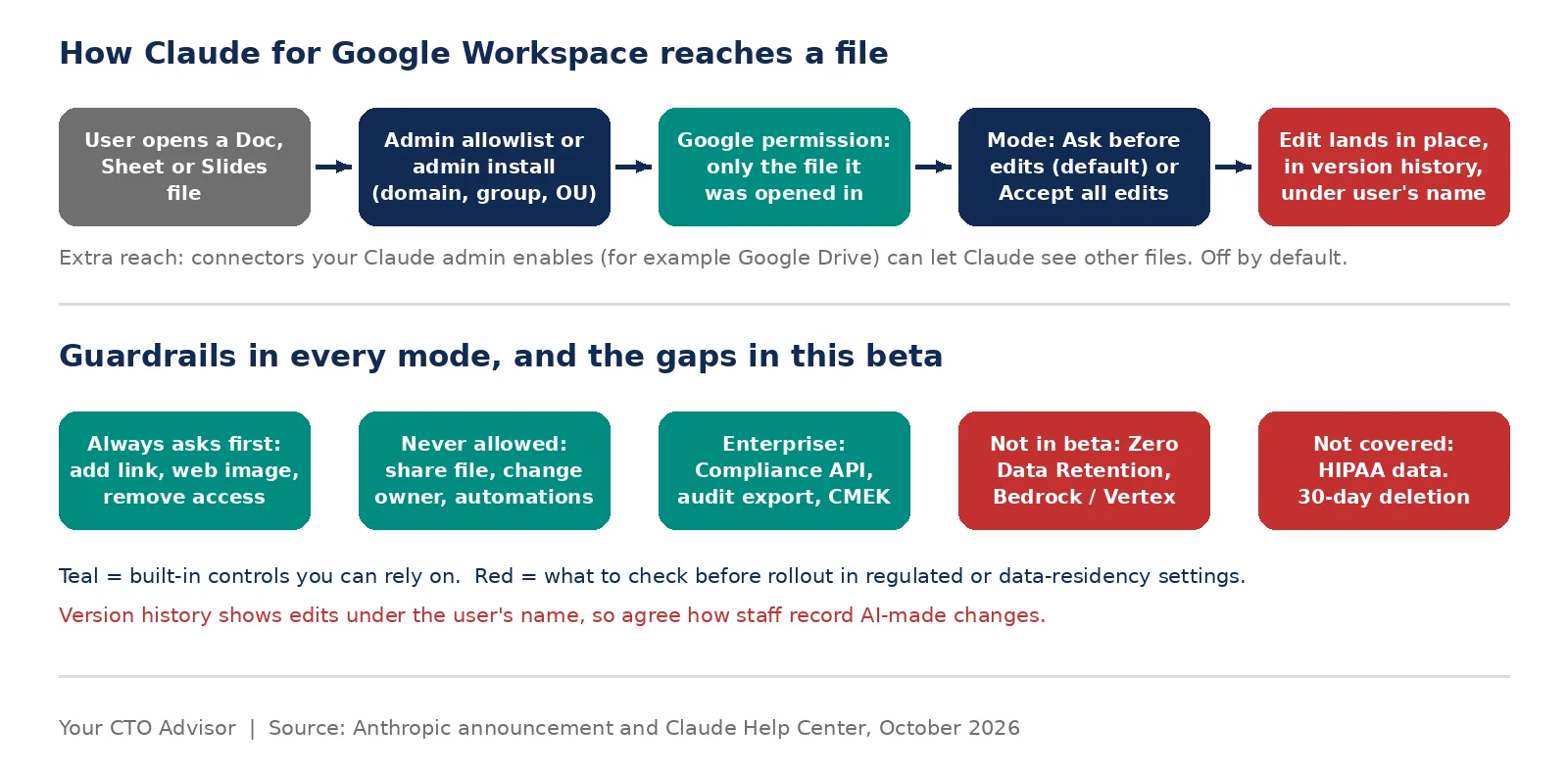
The sidebar asks Google for two permissions: show a sidebar, and view and manage the file it was opened in. Anthropic says Google enforces that limit, so the add-on cannot open other files.
There is a catch. If a user has turned on a Google Drive connector, Claude can use it to see other files. Connectors are off by default, and Claude admins decide which ones members can use.
The default mode is “Ask before edits”, where each change waits for approval. In “Accept all edits”, Claude applies ordinary content changes without stopping.
Some limits hold in both modes. Claude always asks before it adds a link, inserts an image from a web address or removes someone’s access. It cannot share the file, change the owner or create scheduled automations, even if asked.
The fine print for regulated teams
The Help Center is unusually direct about what this beta does not do. Zero Data Retention is not available, and there is no route through Amazon Bedrock, Google Cloud Vertex AI or Azure AI Foundry. Users must sign in with a Claude account.
Inputs and outputs are deleted within 30 days under standard terms, and the extension does not inherit custom retention settings your organisation may have set. HIPAA-ready organisations are told not to use it with protected health information.
On the plus side, Enterprise plans get the Compliance API, customer-managed encryption keys and OpenTelemetry audit export for the add-on. Anthropic says this content is not used to train its models.
For firms with data-residency rules in Singapore, India, the EU or the Gulf, that mix matters. The audit trail is strong, but the deployment options are narrower than for Claude in Microsoft 365.
A five-point rollout checklist
Start with admin install for one group or organisational unit, not the whole domain. Google’s Admin console supports both. Keep “Ask before edits” as the norm for finance models, contracts and board decks. Decide which connectors, skills and models the sidebar may use, because it inherits them from your Claude organisation. Check retention and residency needs first. If you require Zero Data Retention or a cloud-provider route, this beta does not fit yet. Turn on Compliance API or OpenTelemetry export on Enterprise, so you can see what Claude changed and when.
The skeptical note
This is a beta, and the Help Center lists real limits. Claude cannot read Docs comments, its edits land as direct edits rather than suggestions, and a single long task stops after six minutes.
Prompt injection is also a live risk. Anthropic says Claude treats document content as data and flags hidden text, but it still tells users to review proposed actions, especially in files from outside the company.
And because edits are recorded under the user’s name, version history alone will not tell you whether a person or the AI made a change. That is a process question your teams should settle now.
Sources
Anthropic, “Claude now works with Google Docs, Sheets, and Slides”: https://claude.com/resources/articles/claude-now-works-in-google-docs-sheets-and-slides
Claude Help Center, “Use Claude in Google Docs, Sheets, and Slides”: https://support.claude.com/en/articles/16951679-use-claude-in-google-docs-sheets-and-slides
VentureBeat, 6 October 2026: https://venturebeat.com/technology/you-can-now-open-claude-directly-in-google-docs-sheets-and-slides-and-vice-versa-open-and-edit-the-files-in-claude
9to5Google, 6 October 2026: https://9to5google.com/2026/10/06/claude-google-docs-sheet-slides/
Originally published on LinkedIn in the Your CTO Advisor newsletter: read and comment on LinkedIn →