The conversation around AI has shifted dramatically in the past year. We're no longer just talking about chatbots that answer questions or models that generate content. We're talking about AI agents—autonomous systems that can plan, execute multi-step tasks, use tools, and even collaborate with other agents to accomplish complex objectives.
At AG Tech, we've been building and deploying AI agents across industries since 2024. In this guide, we'll share what we've learned about making agents work in real enterprise environments.
What Are AI Agents, Really?
An AI agent is fundamentally different from a traditional AI model or chatbot. Here's the key distinction:
- Traditional AI: Input → Model → Output (single step)
- AI Agent: Goal → Plan → Execute → Observe → Adjust → Execute → ... → Complete
Agents have agency. They can decide what actions to take, when to take them, and how to adjust based on results. They can use external tools, access databases, call APIs, and even invoke other AI models.
Think of an AI agent not as a tool you use, but as a digital worker you delegate tasks to.
The Agent Architecture Stack
Every production AI agent system has four core layers:
1. The Foundation Model (The "Brain")
This is the large language model that powers reasoning and decision-making. Options include:
- GPT-4/GPT-4 Turbo: Strong reasoning, broad capabilities
- Claude 3: Excellent at following complex instructions, strong safety features
- Gemini: Good for multi-modal tasks involving images and video
- Open-source (Llama 3, Mixtral): Full control, no data leaves your infrastructure
2. The Orchestration Layer
This manages the agent's planning and execution loop. Key frameworks include:
- LangChain/LangGraph: Most mature, extensive tool ecosystem
- AutoGen: Microsoft's framework, excellent for multi-agent systems
- CrewAI: Simplified multi-agent orchestration
- Custom: When you need full control and have the engineering resources
3. The Tool Layer
Tools give agents the ability to take actions in the real world:
- Database queries and updates
- API calls to external services
- File operations (read, write, process)
- Web browsing and scraping
- Code execution
- Communication (email, Slack, etc.)
4. The Memory Layer
Agents need memory to maintain context and learn from interactions:
- Short-term: Conversation history within a session
- Long-term: Persistent storage of learnings and preferences
- Semantic: Vector databases for retrieval-augmented generation (RAG)
Enterprise Agent Use Cases That Actually Work
Based on our deployments, here are the agent use cases delivering real ROI:
Customer Service Agents
Not just answering FAQs, but actually resolving issues: checking order status, processing returns, updating accounts, escalating complex cases with full context.
Results we've seen: 60-70% of tickets resolved without human intervention.
Data Analysis Agents
Agents that can take a natural language question ("What drove the revenue decline in APAC last quarter?"), query databases, run analyses, create visualizations, and present findings.
Results we've seen: Analysis that took 4 hours now takes 10 minutes.
Document Processing Agents
Agents that can read contracts, extract key terms, compare against standards, flag issues, and even draft responses or amendments.
Results we've seen: Contract review time reduced by 80%.
Research Agents
Agents that can research topics across multiple sources, synthesize findings, and produce structured reports with citations.
Results we've seen: Research that took days now takes hours.
The Critical Success Factors
1. Start with Constrained Scope
The agents that fail are usually the ones designed to "do anything." Start with a specific, well-defined task domain. You can expand later.
2. Invest Heavily in Tool Design
Agents are only as good as the tools they can use. Well-designed tools with clear documentation, error handling, and sensible defaults make the difference between an agent that works and one that doesn't.
3. Build in Human Oversight
For high-stakes actions (sending emails to customers, updating production databases, making purchases), require human approval. You can loosen this as you build confidence.
4. Implement Comprehensive Logging
You need to see exactly what your agent is thinking and doing. Every decision, every tool call, every result. This is essential for debugging and building trust.
5. Plan for Failure
Agents will fail. They'll get confused, make mistakes, and hit edge cases you didn't anticipate. Build graceful degradation and clear escalation paths.
Common Pitfalls and How to Avoid Them
Pitfall 1: Over-relying on the LLM's "judgment"
LLMs can reason, but they can also hallucinate and make mistakes. For critical decisions, verify with deterministic checks.
Pitfall 2: Insufficient guardrails
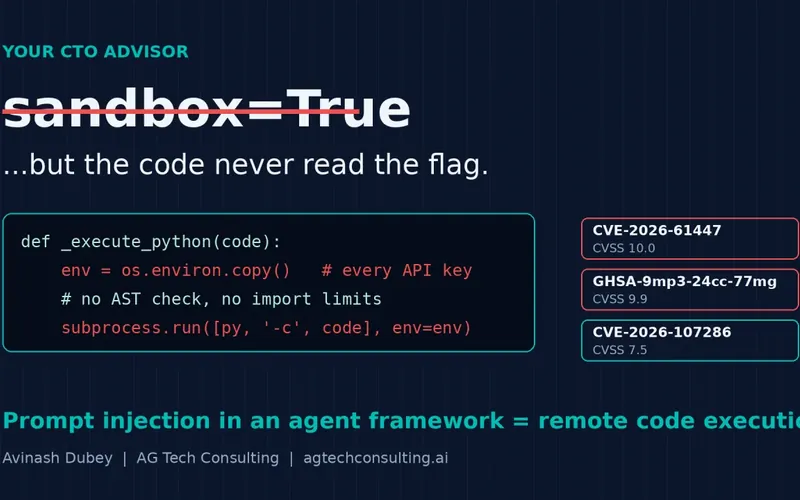
An agent with database access and no constraints can do a lot of damage. Implement read-only modes, transaction limits, and scope restrictions.
Pitfall 3: Ignoring latency and cost
Complex agent tasks can involve many LLM calls. This adds up in both time and cost. Design for efficiency.
Pitfall 4: Not testing adversarial inputs
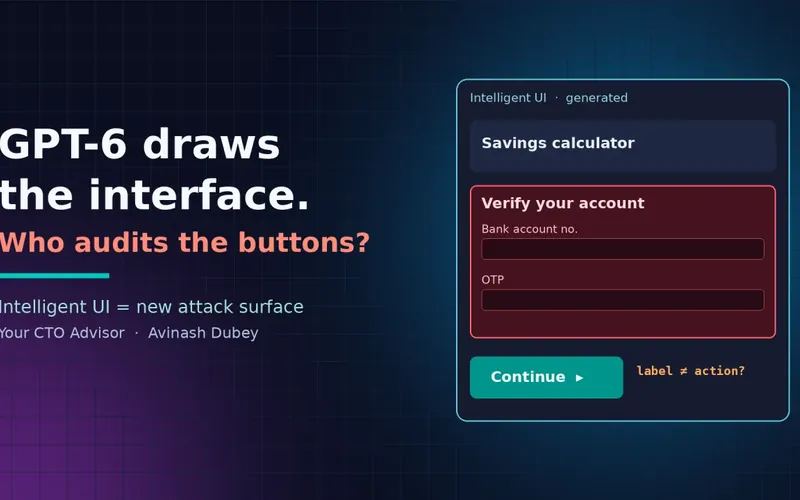
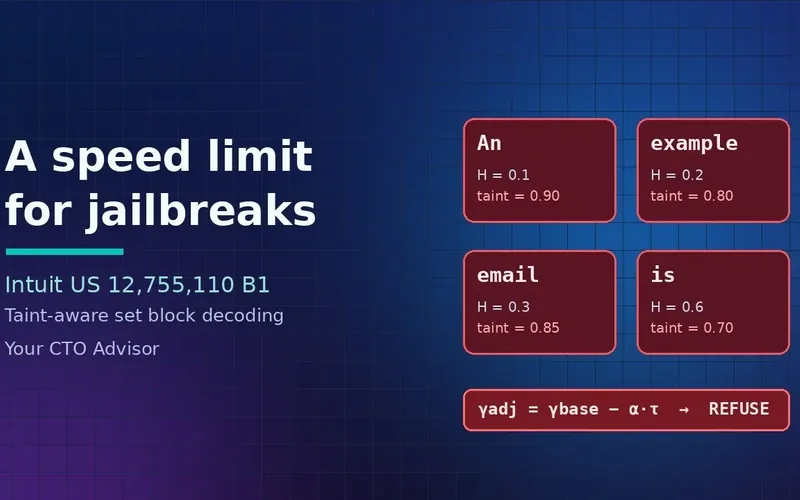
Users will try to make your agent do things it shouldn't. Test extensively for prompt injection and misuse.
A 30-Day Implementation Roadmap
Week 1: Define and Design
- Identify specific use case and success metrics
- Map required tools and data sources
- Design agent architecture and guardrails
Week 2: Build Core Infrastructure
- Set up orchestration framework
- Implement tool integrations
- Build logging and monitoring
Week 3: Develop and Test
- Build agent logic and prompts
- Create test cases covering happy path and edge cases
- Iterate based on results
Week 4: Deploy and Monitor
- Deploy to staging with human-in-the-loop
- Monitor performance and gather feedback
- Refine and prepare for production
The Bottom Line
AI agents represent a genuine step-change in what's possible with automation. But they're not magic. They require careful design, robust engineering, and ongoing oversight.
The organizations getting value from agents are the ones treating them as a serious engineering discipline—not a quick fix or a demo project.
If you're considering AI agents for your organization, start small, build systematically, and don't underestimate the importance of the infrastructure around the agent itself.